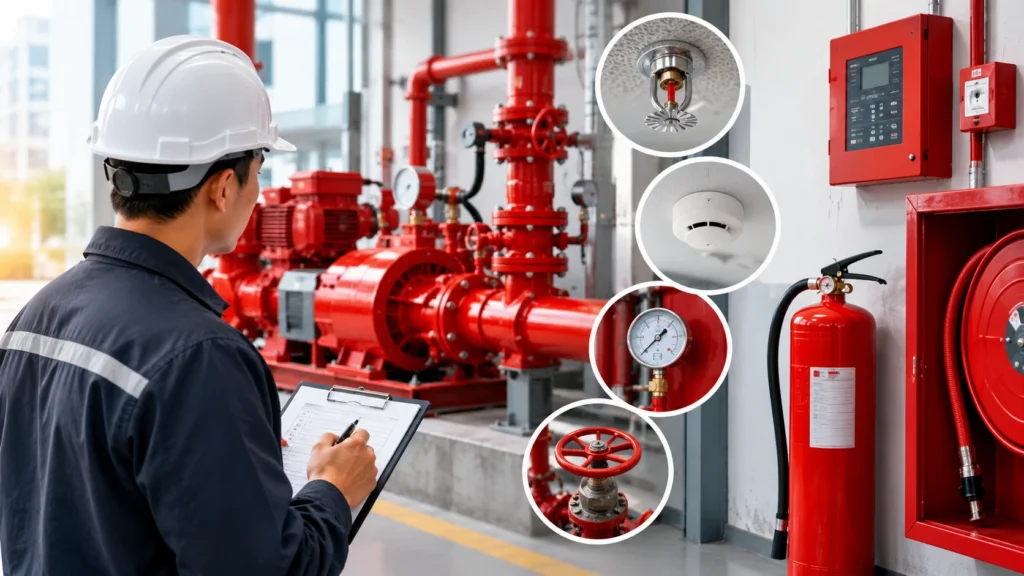
A fire protection system is only useful when its equipment is ready to operate when needed. In a commercial building, this can include fire pumps, sprinkler systems, fire alarms, hose reels, extinguishers, valves, pipes, control panels, and other connected equipment.
These systems remain in place for years, often operating quietly in the background. Because many components are not used during normal building operations, faults can remain unnoticed until an inspection or an emergency exposes the problem.
RELEVANT TOPICS
Facilities Management for Commercial Buildings: A Complete Maintenance Checklist
Preventive maintenance helps building owners and facility managers identify these issues earlier. Regular inspection, testing, servicing, and record-keeping can help keep fire protection equipment in working condition and reduce the chance of unexpected system faults.
Why Fire Protection System Maintenance Matters?
Fire incidents can happen in offices, warehouses, industrial properties, retail spaces, restaurants, and other commercial premises. Singapore recorded 2,050 fire cases in 2025, an increase of 3% from 2024. Fires at non-residential premises increased by 13.5% during the same period.
The figures show why building operators cannot treat fire protection as a once-a-year task. A fire protection system needs regular attention throughout the year.
Maintenance also helps facility teams identify:
- Damaged or worn components
- Pressure problems
- Blocked pipes or valves
- Faulty alarm equipment
- Pump performance issues
- Expired or damaged extinguishers
- Poorly maintained fire doors
- Missing or damaged safety signage
- Unreported system faults
- Incomplete maintenance records
The exact inspection and servicing schedule depends on the building, equipment, applicable requirements, and manufacturer’s instructions.
Common Fire Protection System Problems
Several problems appear repeatedly during fire protection system inspections. Some are caused by ageing equipment, while others develop because routine checks are missed.
1. Fire Pump Problems
Fire pumps are a major part of many fire protection systems. They need to provide water at the required pressure and flow when the system calls for it.
Common problems include:
- Low pressure
- Abnormal vibration
- Unusual noise
- Motor problems
- Damaged seals
- Leakage
- Electrical faults
- Corrosion
- Poor pump performance
A pump may look fine from the outside while developing an internal problem. Regular testing can help identify changes in performance before a serious fault occurs.
2. Blocked or Damaged Sprinkler Systems
Sprinkler systems contain networks of pipes, valves, fittings, and sprinkler heads. Dust, corrosion, physical damage, unauthorised modifications, or other site conditions can affect the system.
During inspection, technicians may check:
- Sprinkler heads
- Pipework
- Valves
- Pressure gauges
- Control assemblies
- Signs of corrosion
- Physical obstructions
- Water supply arrangements
Sprinkler heads should also remain free from objects that could interfere with water distribution.
3. Fire Alarm System Faults
A fire alarm system needs to detect and report signs of fire through its connected devices and control equipment.
Common faults may include:
- Faulty detectors
- Damaged manual call points
- Battery problems
- Control panel faults
- Wiring issues
- Communication failures
- False alarms
- Fault indicators that remain unresolved
A recurring fault should not simply be reset without finding out why it occurred.
4. Fire Hose Reel Problems
Fire hose reels can develop problems through leakage, corrosion, damaged hoses, poor water pressure, or restricted access.
A maintenance check should look at:
- Hose condition
- Hose reel operation
- Water supply
- Nozzle condition
- Cabinet condition
- Accessibility
- Signs of leakage
- Supporting fittings
Equipment that is difficult to access during an emergency can create another problem even when the equipment itself is working.
5. Valve and Pipework Issues
Valves control different parts of a fire protection system. If a valve is damaged, incorrectly positioned, leaking, or difficult to operate, the affected section of the system may not perform as expected.
Pipework can also develop corrosion, leaks, or physical damage.
Routine inspections should check:
- Valve position
- Valve accessibility
- Pipe condition
- Joint connections
- Visible leakage
- Corrosion
- Pressure readings
- Signs of physical damage
Clear labelling can also help building personnel identify equipment during inspections and emergency situations.
6. Fire Extinguisher Problems
Fire extinguishers are easy to overlook because they are visible throughout many buildings. A quick visual check can identify several common problems.
Check for:
- Damaged cylinders
- Missing safety pins
- Low pressure
- Corrosion
- Obstructed access
- Incorrect positioning
- Damaged hoses or nozzles
- Expired service information
An extinguisher should remain accessible and suitable for its designated location.
7. Emergency Lighting and Fire Safety Signage
Fire protection is not limited to pumps, sprinklers, and alarms. Occupants also need clear routes and information during an emergency.
Facility teams should inspect:
- Emergency lighting
- Exit signs
- Fire action notices
- Escape route signage
- Fire equipment signs
- Staircase access
- Emergency exits
Signs that are damaged, blocked, poorly positioned, or difficult to see should be reported for correction.
How Does Preventive Maintenance Help?
Preventive maintenance means inspecting and servicing equipment before a major failure occurs. It gives building teams a planned way to check equipment condition instead of waiting for a breakdown.
A good maintenance programme can help in several areas.
Finding Small Problems Early
A minor pressure change, small leak, unusual pump vibration, or recurring alarm fault may provide an early indication of a larger equipment problem.
Finding these signs during scheduled inspections gives the maintenance team an opportunity to investigate them before they become more difficult to address.
Reducing Unexpected Equipment Failures
No maintenance plan can guarantee that equipment will never fail. Regular checks can, though, identify worn components and recurring faults that may otherwise remain unnoticed.
For example, a fire pump showing unusual vibration during routine testing may need further inspection before the issue develops into a larger mechanical fault.
Keeping Maintenance Records Organised
Every inspection should produce a clear record showing what was checked, what was found, and what action was taken.
A basic record can include:
- Inspection date
- Equipment name
- Equipment location
- Inspection findings
- Faults identified
- Repair work
- Parts replaced
- Technician details
- Follow-up date
- Completion status
Good records also help the next technician understand the equipment’s previous condition.
A Practical Preventive Maintenance Schedule
The maintenance schedule should be based on the building and its fire protection systems. A simple framework can help facility teams organise routine work.
Daily or Routine Visual Checks
Building personnel can monitor:
- Fire exits
- Access to fire equipment
- Visible leaks
- Alarm panel indicators
- Fire extinguisher accessibility
- Obstructions around fire equipment
These checks are generally simple and can be included within normal building rounds.
Monthly Checks
Depending on the system and applicable requirements, monthly maintenance planning may include:
- Fire pump condition
- Pressure gauges
- Valves
- Fire hose reels
- Alarm panel condition
- Emergency lighting
- Fire equipment accessibility
Any fault should be recorded and assigned for follow-up.
Scheduled Specialist Inspection
Certain equipment requires inspection, testing, servicing, or certification by suitably qualified personnel. The schedule should follow applicable Singapore requirements, equipment specifications, and service recommendations.
A specialist inspection may cover multiple connected components rather than looking at one piece of equipment in isolation.
When Should a Fire Protection System Be Serviced?
There is no single maintenance frequency that applies to every building. A small office and a large industrial property may have very different fire protection systems and operating conditions.
The maintenance schedule can depend on:
- Building type
- Occupancy
- Fire protection system design
- Equipment age
- Manufacturer requirements
- Previous faults
- Site conditions
- Applicable Singapore requirements
- Changes to the building or its use
A maintenance plan should therefore be prepared around the actual fire protection systems installed at the property.
How to Choose a Fire Protection Maintenance Provider
Choosing the right service provider involves looking beyond the price of a maintenance contract.
A building owner should ask about:
- Relevant experience – Does the team work with similar commercial or industrial properties?
- Technical coverage – Can they inspect the types of fire systems installed at the property?
- Service records – Will inspection and repair work be properly documented?
- Response process – What happens when a system fault is reported?
- Maintenance planning – Are scheduled inspections tracked?
- Technician capability – Does the service team have the required technical knowledge?
- Communication – Will the building management team receive clear reports after service visits?
A fire protection system company in Singapore should be able to explain the maintenance scope clearly rather than offering a generic service package.
Businesses should also confirm whether a fire protection system contractor in Singapore can handle the specific equipment installed at their property before signing a service agreement.
Fire Safety Maintenance for Commercial Properties
Commercial buildings may have offices, retail spaces, restaurants, storage areas, car parks, plant rooms, and other areas with different fire risks.
For example, a restaurant may require close attention to kitchen-related fire risks, while a warehouse may have different requirements because of storage arrangements and equipment.
Fire Safety System Maintenance Singapore should therefore be planned according to the building’s actual systems, usage, and site conditions.
Likewise, Fire Protection Maintenance Services Singapore may include inspection, testing, repair, servicing, and documentation depending on the agreed scope.
For properties with pumps, sprinkler systems, fire alarms, hose reels, and other connected equipment, Fire Fighting System Maintenance Singapore should cover the relevant equipment as part of a coordinated maintenance plan.
What Building Managers Should Check Before a Service Visit
Facility managers can prepare for a maintenance visit by keeping equipment records and previous reports available.
Before the technician arrives, check:
- Previous unresolved faults
- Equipment locations
- Recent alarm issues
- Pump problems
- Access to plant rooms
- Previous service reports
- Upcoming inspection dates
- Changes made to the building
- Areas that require special attention
This gives the maintenance team a clearer starting point and reduces time spent searching for information.
When to Consider Professional Support
A fire protection system involves multiple components that may work together during an emergency. Maintenance should therefore be handled by personnel with suitable technical knowledge and qualifications for the work involved.
Vanguard Facility Management Pte. Ltd. provides fire protection system maintenance in Singapore for commercial and industrial properties, covering inspection, testing, servicing, and repair support based on the property’s requirements.
Businesses looking for a facilities management company in Singapore can also review the wider building maintenance services available from Vanguard.
For information about the company’s background and service capabilities, visit Building Services Company in Singapore.
Final Fire Protection Maintenance Checklist
Before completing a maintenance cycle, building managers can review the following:
- Fire pumps inspected
- Pressure readings checked
- Valves inspected
- Sprinkler system reviewed
- Fire alarm system checked
- Fire hose reels inspected
- Fire extinguishers checked
- Emergency lighting reviewed
- Fire exits kept clear
- Safety signs checked
- Faults recorded
- Repairs assigned
- Service reports filed
- Next maintenance date confirmed
Fire protection systems should not only be checked when an inspection date arrives. Regular maintenance gives building teams a better opportunity to identify equipment problems, keep records current, and address faults before they become larger maintenance concerns.
For Singapore commercial and industrial properties, a planned maintenance schedule can give facility managers a clear process for monitoring fire pumps, alarms, sprinklers, hose reels, valves, extinguishers, and other fire safety equipment.