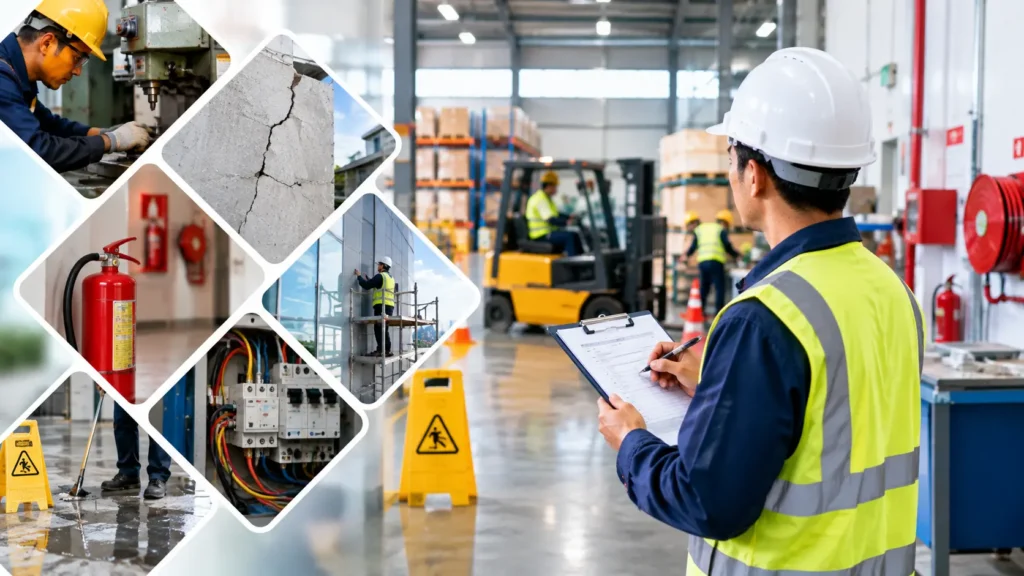
Industrial and commercial facilities contain many activities, people, machines and building systems operating at the same time. A warehouse may have forklifts moving between storage areas, while a manufacturing facility may have heavy machinery running for several hours each day. Commercial buildings also have risks linked to electrical systems, fire safety, maintenance work, cleaning and contractor activities.
A workplace can appear orderly while still having hazards that need attention. Loose cables, blocked walkways, poor housekeeping, unprotected machinery, slippery floors and unsafe access to equipment can create risks for workers, contractors and visitors.
Singapore continues to monitor workplace safety closely. According to the Ministry of Manpower (MOM), Singapore recorded a workplace fatal injury rate of 0.96 per 100,000 workers in 2025, while the major injury rate was 15.7 per 100,000 workers, excluding platform workers. Construction, Manufacturing, and Transportation & Storage accounted for more than half of workplace fatal and major injuries that year.
Understanding common hazards is a practical starting point for facility owners and managers.
Why Workplace Safety Risks Need Regular Attention
Workplace hazards can change as operations change.
A company may install new machinery, rearrange storage areas, introduce new chemicals, increase production, renovate a building or bring in new contractors. Each change can introduce a new hazard or alter an existing risk.
Under Singapore’s Workplace Safety and Health framework, employers and other duty holders are responsible for identifying workplace hazards and taking reasonable steps to eliminate or reduce risks. Risk assessment should cover both routine and non-routine activities, including repair and maintenance work.
For this reason, workplace safety should not be treated as a one-time inspection. Regular checks, risk assessments, worker communication and maintenance all have a role.
10 Common Factors
1. Slips, Trips and Falls
Slips, trips and falls are common across industrial and commercial properties.
Typical causes include:
- Wet or oily floors
- Uneven walking surfaces
- Loose cables
- Poor housekeeping
- Materials left in walkways
- Damaged floor surfaces
- Inadequate lighting
- Unmarked changes in floor level
In an industrial facility, oil or chemical spills may create additional concerns. In an office or commercial property, wet floors during cleaning can create risks for employees and visitors.
Facility teams should keep walkways clear, address spills quickly, maintain suitable lighting and inspect damaged surfaces.
2. Machinery and Equipment Hazards
Industrial machinery can create serious risks when moving parts are accessible or equipment is poorly maintained.
Examples include presses, conveyors, cutting machines, rotating equipment, lifting equipment and automated production systems.
Common concerns include:
- Missing machine guards
- Unexpected machine movement
- Poor maintenance
- Unsafe access during repairs
- Inadequate operator training
- Faulty emergency stops
- Unauthorised machine use
MOM’s recent safety data continues to show machinery safety as an area requiring attention. In 1H 2026, the Manufacturing sector recorded an annualised fatal and major injury rate of 28.4 per 100,000 workers, while metalworking was a major contributor within the sector.
Machine guarding, maintenance checks, training and safe work procedures should therefore form part of routine workplace controls.
3. Working at Height
Work at height can occur in warehouses, factories, commercial buildings and maintenance areas.
Workers may need to access roofs, elevated platforms, ceiling spaces, storage racks, mechanical equipment or building facades.
Risks can arise from:
- Unprotected edges
- Unsafe ladders
- Poorly maintained access equipment
- Inadequate fall protection
- Improper use of mobile elevated platforms
- Unstable working surfaces
Before work starts, the access method, working area and fall protection arrangements should be assessed. Workers also need suitable instruction and supervision for the task.
4. Fire and Emergency Risks
Fire safety is a concern for almost every workplace, but industrial properties can have additional risks from machinery, combustible materials, chemicals, electrical equipment and production processes.
Commercial properties may face risks from kitchens, electrical rooms, storage areas, temporary works and contractor activities.
Common warning signs include:
- Blocked emergency exits
- Poorly maintained fire equipment
- Obstructed fire access routes
- Damaged fire doors
- Improper storage of combustible materials
- Uncontrolled ignition sources
- Poor emergency procedures
A facility should have suitable emergency arrangements, clear escape routes and regular checks of fire protection systems.
Businesses that need specialist guidance can consider Workplace Safety Consultancy in Singapore for workplace safety, health and fire-related requirements.
5. Electrical Hazards
Electrical systems are found throughout industrial and commercial facilities. Distribution boards, machinery, lighting, air-conditioning systems, pumps and temporary equipment can all create electrical hazards when poorly maintained.
Common problems include:
- Damaged cables
- Exposed wiring
- Overloaded sockets
- Poor electrical connections
- Water near electrical equipment
- Unauthorised modifications
- Poorly maintained distribution boards
Electrical rooms should remain accessible only to authorised personnel where required, while equipment and installations should be maintained by suitably qualified persons.
Temporary electrical arrangements also deserve attention during renovation and maintenance projects.
6. Chemical Exposure
Factories, laboratories, cleaning operations, workshops and maintenance teams may handle chemicals as part of normal work.
Potential risks include skin contact, inhalation, spills, fire and improper storage.
A workplace should identify the chemicals being used and understand their associated hazards. Containers should be properly labelled, storage arrangements should be suitable, and workers should receive appropriate information and instruction.
Where chemicals are part of the operation, risk assessment should consider how they are received, stored, handled and disposed of.
7. Vehicle and Forklift Movement
Industrial facilities often have a mixture of pedestrians, forklifts, trucks and other vehicles operating in the same area.
This creates a risk of collision when routes are poorly controlled.
MOM reported that vehicular incidents were the leading cause of workplace fatalities in 1H 2026, accounting for 9 of the 21 workplace fatalities recorded during the period.
Practical controls can include:
- Marked pedestrian routes
- Separate vehicle paths where possible
- Suitable speed limits
- Warning signs
- Reversing controls
- Good visibility
- Trained vehicle operators
- Regular vehicle inspections
Traffic arrangements should be reviewed when site layouts or operating patterns change.
8. Poor Housekeeping and Storage
Poor housekeeping can create several hazards at once.
Materials stacked too high can fall. Blocked walkways can obstruct evacuation. Items stored near electrical equipment may create additional fire concerns. Tools left on floors can cause trips.
A simple housekeeping programme can include:
- Daily area checks
- Defined storage locations
- Clear walkways
- Waste removal
- Spill control
- Safe stacking
- Regular inspection of storage racks
Good housekeeping is particularly useful in facilities where many workers share the same spaces.
9. Poor Maintenance of Building Systems
A workplace’s safety condition also depends on the building systems supporting daily operations.
Damaged flooring, leaking pipes, faulty lighting, poor ventilation, defective doors and deteriorating mechanical systems can create risks for employees and visitors.
Facility managers should keep maintenance records and establish inspection schedules for critical building systems.
A facilities management company in Singapore can support property teams by coordinating building maintenance, inspections and related facility services.
10. Contractor and Maintenance Work
Contractors often work in areas where normal business activities continue at the same time.
Electrical repairs, equipment servicing, hot work, cleaning, roof access and renovation activities can introduce temporary hazards.
Before work starts, the facility team should establish:
- Work scope
- Access arrangements
- Risk assessment
- Permit requirements where applicable
- Isolation requirements
- Emergency arrangements
- Contractor responsibilities
- Communication procedures
Singapore’s WSH framework places responsibilities on employers, occupiers and other stakeholders, with risk assessments forming a central part of workplace risk management.
How Businesses Can Manage Workplace Safety Risks
A practical safety programme should combine several activities rather than rely on one inspection.
Conduct Regular Risk Assessments
Identify hazards associated with routine and non-routine work. Review the assessment when processes, equipment, materials or work conditions change.
Inspect Work Areas
Regular workplace inspections can identify damaged equipment, blocked access routes, poor housekeeping and other visible concerns before they become incidents.
Maintain Equipment and Building Systems
Preventive maintenance should cover machinery, electrical systems, fire protection equipment, ventilation, access systems and other building services relevant to the facility.
Train Workers and Supervisors
Workers need clear information about the hazards associated with their tasks. Supervisors should also understand their responsibilities for monitoring work conditions.
Review Incidents and Near Misses
A near miss can reveal a weakness before someone is injured. Recording and reviewing these events can help facility teams identify recurring problems.
Review Emergency Arrangements
Emergency procedures should cover situations such as fire, chemical spills, equipment failure, serious injury and other site-specific events.
Understanding Singapore’s Workplace Safety Requirements
Businesses operating in Singapore need to understand the legal requirements that apply to their workplace and activities. The workplace safety and health regulations in Singapore cover areas including risk management, incident reporting, first aid, workplace safety committees and safety management systems.
Certain workplaces also have specific requirements for safety and health management systems and regular audits. For example, MOM states that worksites with a contract sum of $30 million or more must undergo SHMS audits at least once every six months.
The requirements that apply to a facility depend on its activities, workplace type and other factors, so businesses should assess their own obligations rather than rely on a generic checklist.
When Should a Business Engage a Safety Consultant?
External support may be useful when a facility has complex operations, multiple contractors, recurring safety concerns or major changes to its workplace.
A Workplace Health and Safety Consultant in Singapore can review workplace conditions, risk assessment practices and safety procedures.
A Workplace Safety Consultant in Singapore may also assist businesses with workplace inspections, risk controls, safety documentation and worker safety practices.
For fire-related workplace concerns, Fire Safety Consultancy in Singapore can provide a separate area of technical support where the site’s requirements call for it.
Businesses may also seek WSH Consultancy Services in Singapore when they need support reviewing workplace safety and health practices across their operations.
Building Safety Into Daily Facility Operations
Workplace safety is closely connected with maintenance, housekeeping, equipment management and daily supervision. A damaged door, leaking pipe, faulty machine guard or blocked walkway can become a safety concern when it is left unresolved.
Working with a specialist Building Services Company in Singapore can help property teams coordinate building-related services alongside workplace safety requirements.
Vanguard Facility Management Pte. Ltd. provides workplace safety, health and fire safety consultancy alongside facility management and building services for commercial and industrial properties.
The safest approach starts with identifying hazards before they cause harm. Regular risk assessments, site inspections, maintenance, training, emergency planning and clear communication give businesses a practical framework for managing workplace risks as conditions change.