Managing a commercial building or industrial facility involves more than keeping the premises clean and operational. Facility managers must coordinate building maintenance, mechanical and electrical systems, safety requirements, contractors and day-to-day service needs.
When these responsibilities are handled separately, communication gaps and maintenance delays can make facility operations more difficult to manage.
For businesses looking for Integrated Facilities Management Services Singapore, an integrated approach brings relevant facility services together under a coordinated management structure. This can help businesses organise maintenance activities, monitor service requirements and maintain better oversight of their properties.
This guide explains what integrated facilities management involves, its key benefits, the services it may include and how businesses can choose a suitable facilities management partner.
What Is Integrated Facilities Management?
Integrated facilities management, commonly known as integrated FM, combines multiple building and facility services under one coordinated management approach.
Instead of managing each service independently, businesses work with a facilities management provider to coordinate maintenance activities, service schedules, reporting and operational requirements.
Depending on the property and contract scope, integrated facilities management may include:
- Mechanical and electrical (M&E) maintenance
- Building maintenance and repairs
- Cleaning and housekeeping
- Security service coordination
- Preventive maintenance planning
- Fire protection system maintenance
- Technical manpower support
- Contractor coordination and service reporting
- Inspection and maintenance documentation
The exact services depend on the facility, operational requirements and agreed contract.
For example, a commercial building may require regular M&E inspections, cleaning and security coordination, while an industrial facility may need additional engineering support, pump maintenance and equipment servicing.
An integrated approach helps facility teams coordinate these requirements through a more structured service arrangement.

Why Integrated Facilities Management Singapore Matters
Building operations involve multiple systems that must work together. A maintenance issue in one area can affect other parts of the facility if it is not identified or addressed promptly.
For example, a fault in an air-conditioning system can affect indoor comfort and business activities. A water pump problem can disrupt water supply, while an unresolved maintenance issue may create additional repair work later.
When service responsibilities are spread across several contractors, facility managers may need to spend considerable time arranging appointments, following up on outstanding work and collecting maintenance records.
Integrated facilities management provides a way to coordinate these activities through an agreed service structure.
A well-planned arrangement can help businesses:
- Coordinate different building services
- Organise preventive maintenance schedules
- Track outstanding maintenance requirements
- Improve communication between service teams
- Maintain clearer service records
- Identify recurring operational issues
- Plan maintenance work around site requirements
The benefits depend on the quality of service delivery, the responsibilities defined in the contract and how effectively the provider coordinates the work.
1. Building Maintenance and Repairs
Building maintenance helps keep a property in suitable operating condition. Regular inspections can identify deterioration, minor defects and repair requirements before they become more difficult to manage.
Typical maintenance activities may include inspecting building components, addressing reported defects, checking common areas and coordinating repair work.
Common maintenance requirements
Facility teams may need to monitor:
- Doors, locks and access points
- Walls, ceilings and floor finishes
- Plumbing fixtures and water connections
- Common areas and shared facilities
- Visible signs of water leakage
- General building defects
- Outstanding repair requests
The inspection requirements vary depending on the property’s age, condition, use and maintenance responsibilities.
How to manage building maintenance effectively
Start by recording known defects and prioritising work according to urgency, safety implications and operational impact.
A maintenance register can help track reported issues, assigned contractors, work status and completed repairs.
For properties requiring wider technical support, businesses can explore Vanguard’s Integrated Facilities Management Services to understand how building maintenance can fit into a coordinated service arrangement.
2. Mechanical and Electrical Maintenance
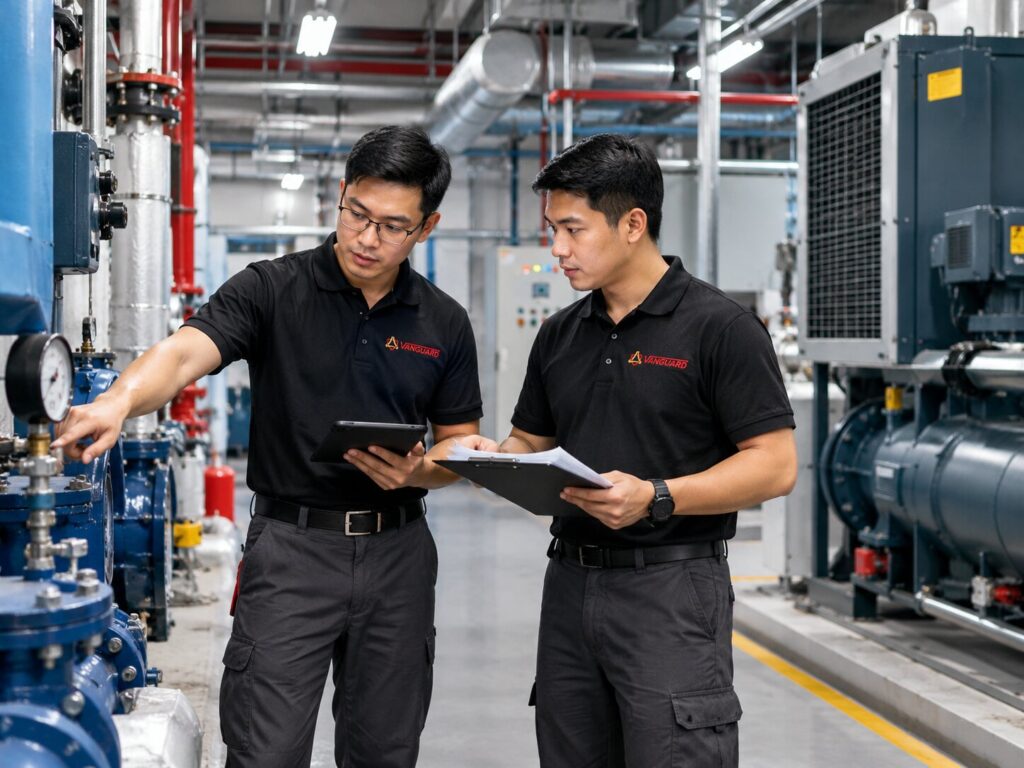
Mechanical and electrical systems support many essential building functions. These may include air-conditioning, ventilation, pumps, electrical distribution and other equipment required for normal operations.
When equipment is not maintained properly, performance can deteriorate and unexpected faults may interrupt facility operations.
Common M&E maintenance requirements
Depending on the property, maintenance activities may involve:
- Inspecting mechanical equipment
- Checking pumps and associated pipework
- Monitoring equipment performance
- Identifying unusual noise, vibration or leakage
- Reviewing maintenance records
- Coordinating repairs with qualified personnel
- Following manufacturer-recommended servicing intervals
The appropriate maintenance schedule depends on equipment type, operating conditions and manufacturer requirements.
Preventive maintenance for building systems
Preventive maintenance involves planned inspections and servicing intended to identify potential issues before they develop into major faults.
For example, monitoring pump pressure, operating temperature and unusual vibration can help technicians identify changes that require further investigation.
Businesses that need specialist pump support can also explore Pump Supply, Repair and Maintenance Services.
Coordinating M&E activities within a wider facilities management plan can help teams organise service schedules and maintain a clearer record of equipment condition.
3. Fire Protection System Maintenance
Fire protection systems are an important part of building safety. Facility managers need to understand the condition of their equipment, arrange appropriate maintenance and address identified faults.
Depending on the site and installed systems, maintenance requirements may include fire alarms, sprinklers, fire pumps, extinguishers, hose reels, emergency lighting and other fire safety equipment.
Why regular fire system maintenance matters
Routine inspections and servicing help identify equipment faults, visible damage and outstanding maintenance requirements.
A structured maintenance programme should consider:
- Inspection and testing schedules
- Equipment condition and accessibility
- Identified faults and required repairs
- Relevant maintenance records
- Applicable regulatory and technical requirements
- Follow-up actions for outstanding issues
The actual requirements depend on the equipment installed and the applicable regulations and technical standards.
Coordinating fire safety maintenance
Fire protection maintenance should be planned around the property’s systems, operating requirements and applicable compliance obligations.
Businesses seeking specialist support can learn more about Fire Protection System Maintenance in Singapore.
Including relevant fire system maintenance activities within a wider facilities management plan can help facility teams coordinate service requirements and maintain oversight of outstanding work.
4. Cleaning and Housekeeping
Clean and well-maintained premises contribute to a more organised working environment for employees, visitors and building occupants.
Cleaning requirements vary according to the type of facility. An office may need routine cleaning of workspaces and shared areas, while an industrial site may require more specialised housekeeping procedures based on its operations.
Common cleaning requirements
Depending on the service scope, cleaning activities may include:
- Office and common-area cleaning
- Floor and surface cleaning
- Washroom maintenance
- Waste collection and disposal coordination
- Shared-space housekeeping
- Cleaning schedule management
- Monitoring cleaning standards
Maintaining consistent cleaning standards
A cleaning schedule should identify the areas to be serviced, the frequency of work and the responsibilities of the service team.
Facility managers can also use inspection checklists and feedback records to identify areas requiring attention.
When cleaning is coordinated with other building services, facility teams can plan work around occupancy, access requirements and operational activities.
The scope should always be agreed with the facilities management provider to ensure that service expectations are clear.
5. Security and Access Coordination
Security requirements differ between commercial buildings, industrial facilities, offices and other properties.
Some sites require controlled access, visitor management and security personnel, while others may rely on access control systems and coordinated security procedures.
Where included in the agreed contract, integrated facilities management can help coordinate security-related responsibilities with other facility services.
Areas to consider
Businesses should review:
- Visitor and contractor access procedures
- Access control arrangements
- Security incident reporting
- Communication and escalation procedures
- Coordination between security and facility teams
- Site-specific operating requirements
The appropriate arrangements depend on the facility’s risk profile and operational needs.
Clear responsibilities and communication procedures help ensure that security-related issues are directed to the appropriate personnel.
6. Preventive Maintenance Planning
Preventive maintenance is a key part of managing building equipment and systems.
Rather than waiting for equipment to fail, facility teams plan inspections and servicing based on operating conditions, manufacturer recommendations, equipment criticality and maintenance history.
What should a maintenance plan include?
A practical maintenance plan may include:
- An inventory of relevant equipment
- Manufacturer recommendations and service intervals
- Planned inspection dates
- Equipment condition records
- Identified defects and repair requirements
- Assigned responsibilities
- Maintenance completion records
- Follow-up dates for unresolved issues
How to improve maintenance planning
Start by identifying the equipment and building systems that have the greatest operational importance.
Next, review existing service records and outstanding defects. Use this information to organise maintenance activities according to urgency, equipment requirements and site access.
A maintenance register can help facility teams monitor upcoming work and identify overdue tasks.
For critical equipment, the maintenance approach should also consider the consequences of equipment failure and any applicable inspection or servicing requirements.
The objective is to maintain a clear view of the work required, the work completed and the issues that still need attention.
7. Technical Manpower and Contractor Coordination
Facility operations may require technicians, engineers, supervisors and specialist contractors to carry out different types of work.
Managing these resources independently can create additional administrative responsibilities for facility teams, particularly when several services need to be coordinated at the same site.
Why coordination matters
A structured approach can help clarify:
- Which team is responsible for each activity
- When work should be carried out
- What access or safety arrangements are required
- Which issues need to be escalated
- What documentation is required after the work
- How outstanding tasks will be followed up
Planning technical manpower requirements
Businesses should assess the skills required, expected workload, site conditions and duration of support before arranging technical manpower.
Where manpower outsourcing is part of the service requirement, businesses can explore Professional Manpower Outsourcing Services.
For industrial sites requiring additional engineering support, Engineering and Fabrication Services may also be relevant, depending on the project’s requirements.
The scope of responsibility should be clearly defined before work begins, particularly when multiple contractors or specialist service providers are involved.
8. Maintenance Reporting and Documentation
Maintenance records provide useful information about the condition of building systems and the work carried out on them.
Without clear records, facility managers may find it difficult to identify recurring issues, check completed work or determine which maintenance activities remain outstanding.
What should maintenance records include?
Depending on the service and equipment, records may include:
- Inspection dates
- Equipment identification details
- Findings and observations
- Faults identified
- Repair work completed
- Replacement components, where relevant
- Outstanding maintenance requirements
- Recommendations and follow-up dates
Using records to support better decisions
Regular reporting helps facility teams review maintenance activity and identify recurring problems.
For example, repeated faults affecting the same pump or mechanical system may indicate that further investigation is required.
Records can also support budget planning by helping businesses understand recurring repair needs and the condition of their equipment.
Reporting requirements should be agreed with the facilities management provider so that the format, frequency and level of detail suit the facility.
How to Choose an Integrated Facilities Management Company in Singapore
Choosing a suitable provider requires more than comparing quotations. Businesses should evaluate whether the provider understands the facility, can deliver the agreed service scope and has appropriate experience for the required work.
Review the service scope
Confirm which services are included in the proposal and which require separate contractors or additional charges.
The agreement should explain responsibilities, exclusions, reporting requirements and the process for handling additional work.
Check relevant experience
Review the provider’s experience with facilities similar to yours.
Commercial buildings, industrial plants and specialised sites can have different operating conditions and technical requirements. Relevant project experience can help you assess whether the provider understands these differences.
Understand the maintenance approach
Ask how inspections are scheduled, how faults are recorded and how outstanding work is tracked.
A clear maintenance process should explain how issues are identified, assigned, addressed and reported.
Check qualifications and compliance requirements
Where the work requires specific licences, qualifications, professional appointments or regulatory compliance, verify that the relevant personnel and service providers meet those requirements.
Do not assume that every facilities management company is authorised to perform every specialist task.
Evaluate communication and reporting
Ask how the provider will communicate service updates, report defects and escalate urgent issues.
Clear reporting responsibilities make it easier for facility managers to understand the status of work and identify decisions requiring their attention.
Compare quotations carefully
Compare proposals against the same service scope, maintenance requirements and reporting expectations.
A lower quotation may exclude services that another provider includes. Reviewing the full scope can help businesses make a more informed decision.
How Integrated Facilities Management Supports Different Industries
Facilities management requirements vary by industry and property type.
Commercial buildings
Commercial facilities may need coordinated building maintenance, M&E servicing, cleaning, security and occupant support.
The service plan should reflect building occupancy, shared-space requirements and operational schedules.
Industrial facilities
Industrial sites may require additional attention to pumps, mechanical systems, equipment maintenance, fabrication and technical support.
Businesses can explore Industrial Facilities Management Services for information relevant to industrial operations.
Hospitality properties
Hotels and hospitality facilities often need maintenance work coordinated around guest services, shared facilities and daily operating requirements.
Planning access and scheduling maintenance carefully can help reduce disruption to normal operations.
Facilities with specialist inspection requirements
Some properties need periodic structural inspections, façade inspections or other specialist assessments.
These requirements should be handled by appropriately qualified professionals in accordance with applicable regulations and the property’s specific needs.
For relevant inspection services, visit Vanguard’s Professional Engineer and Building Inspection Services page.
Building a More Coordinated Facilities Management Plan
Effective facilities management starts with understanding the building, its equipment, service requirements and operational priorities.
A coordinated approach can help businesses organise maintenance activities, monitor service delivery and maintain clearer records across different facility functions.
The most suitable arrangement depends on the property’s size, condition, operating hours, technical systems and agreed service requirements.
Businesses should review their existing maintenance arrangements, identify gaps and define clear responsibilities before selecting a service provider.
Integrated Facilities Management Services in Singapore
Managing multiple building services requires proper planning, communication and follow-up. A coordinated facilities management arrangement can help businesses organise maintenance requirements and maintain oversight of essential facility operations.
Vanguard Facility Management Pte. Ltd. supports businesses in Singapore with facilities management and related building and engineering services. Our service scope can be discussed according to your property’s operational requirements and maintenance needs.
If you are reviewing your existing arrangements or planning facilities management support for a commercial or industrial property, contact Vanguard Facility Management to discuss your requirements.
A clear understanding of the site, service scope and maintenance priorities is a useful starting point for developing an appropriate facilities management plan.