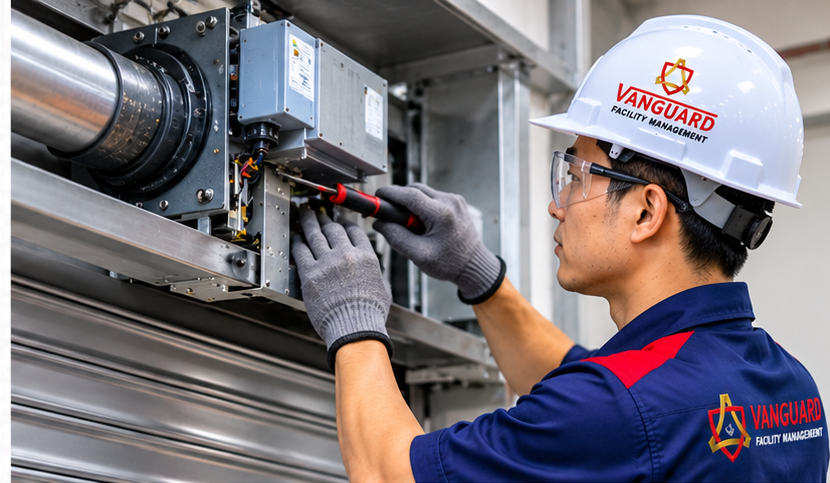
Fire-rated roller shutters are specialised fire protection systems designed to restrict the spread of fire between different areas of a building. When activated by a fire alarm or approved detection mechanism, the shutter closes automatically or descends under gravity, depending on its design. Its tested fire resistance helps maintain compartmentation and protect adjacent spaces.
1. What Is a Fire-Rated Roller Shutter?
A fire rated roller shutter is a protective barrier installed across an opening in a building to help prevent fire from spreading between designated fire compartments.
Unlike an ordinary commercial roller shutter, a fire-rated system is designed and tested to withstand fire exposure for a specified period under recognised fire-resistance testing standards.
These shutters are commonly installed in:
- Shopping centres and retail buildings.
- Industrial facilities and factories.
- Warehouses and logistics centres.
- Commercial kitchens and food establishments.
- Commercial buildings with large internal openings.
- Buildings requiring fire compartmentation.
In Singapore, fire shutters are addressed under the Singapore Civil Defence Force (SCDF) Fire Code 2023, particularly Clause 3.7.7, which covers their use, fire resistance and operation.
A fire shutter may be used as a compartment wall in permitted circumstances, but it cannot replace every type of fire compartment wall. Specific exclusions apply, including certain areas associated with means of escape and Fire Command Centres.
2. How Do Fire Rated Roller Shutters Work?
Fire rated roller shutters work by automatically closing an opening when a fire detection or alarm signal activates the system. The descending curtain forms a protective barrier that helps limit the passage of flames and heat between building compartments.
The exact operation depends on whether the system uses gravity operation or an electrically driven motor.
Step 1: Fire Detection
The process begins when a connected fire alarm system or approved detection mechanism identifies a fire condition.
Depending on the installation and approved design, activation may come from:
- The building fire alarm system.
- A local smoke detection system.
- An approved fusible link mechanism.
- Other approved fire detection and control arrangements.
The activation arrangement depends on the shutter’s location and intended fire protection function.
Step 2: Activation of the Control Mechanism
Once the fire signal is received, the shutter’s control mechanism releases or activates the closing system.
For gravity-operated shutters, the release mechanism allows the shutter curtain to descend under gravity.
For electrically operated shutters, the motor drives the curtain downwards following the activation signal.
Step 3: Controlled Shutter Descent
The shutter curtain moves downwards to cover the designated opening.
Under SCDF Fire Code 2023 Clause 3.7.7, vertical fire shutters must comply with the following maximum closing times and descending speeds:
| Shutter Height | Maximum Full Closing Time | Maximum Descending Speed |
| Not exceeding 6 metres | 30 seconds | 0.2 m/s |
| Above 6m up to 12m | 60 seconds | 0.2 m/s |
These limits apply to the specified vertical fire shutter arrangements covered by the clause.
Step 4: Fire Compartment Protection
Once fully closed, the fire shutter helps separate the affected area from adjoining spaces.
Its fire resistance helps restrict the spread of flames and heat through the protected opening. The actual level of protection depends on the tested and approved shutter assembly.
Step 5: Inspection and System Reset
After an activation, authorised personnel should investigate the cause, inspect the shutter and its associated components, and arrange the appropriate reset procedure.
A shutter should not be forced open, bypassed or returned to normal service without confirming that the system is safe and operational.
3. What Are the Main Components of a Fire Rated Roller Shutter?
Understanding the fire roller shutter details helps building owners and facility managers identify the components that require attention during inspection and maintenance.
| Component | Function |
| Fire-rated curtain | Forms the main protective barrier across the opening. |
| Guide rails | Keep the curtain aligned while moving up and down. |
| Barrel or drum | Stores the rolled-up shutter curtain when open. |
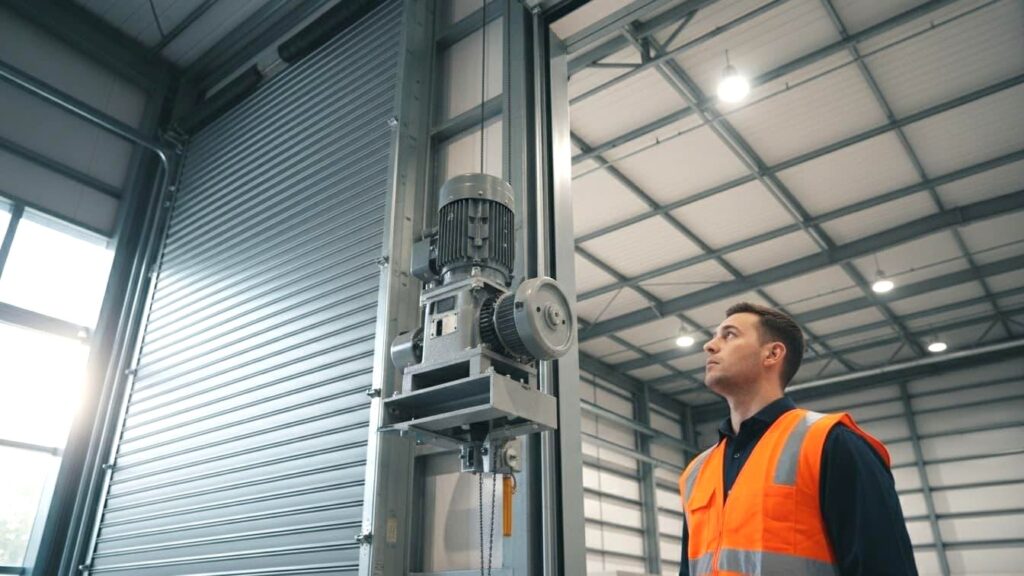
| Motor or release mechanism | Controls the shutter’s movement or releases gravity operation. |
| Control panel | Manages operating signals and system functions. |
| Fire alarm interface | Receives the relevant activation signal. |
| Emergency power supply | Supports electrically operated systems during power interruptions, as required by the design. |
| Safety devices | Support safe operation and help prevent operational hazards. |
Each component must be compatible with the approved fire shutter design. Replacing an individual component with an unsuitable alternative can affect the performance of the overall assembly.
4. What Types of Fire Rated Roller Shutters Are Available?
Fire shutters are available in several configurations. The correct type depends on the building layout, opening size, fire compartmentation requirements and approved design.
4.1 Vertical Fire Rated Roller Shutters
Vertical fire shutters move downwards from a top-mounted assembly.
They are commonly used in large openings between retail spaces, warehouses and industrial areas.
4.2 Horizontal Fire Shutters
Horizontal fire shutters move across an opening horizontally or are installed to protect particular horizontal openings, depending on the system design.
They may be considered for specific building configurations where a conventional vertical shutter is unsuitable.
4.3 Lateral Fire Shutters
Lateral fire shutters move sideways to protect openings where the available installation space or building configuration requires a horizontal closing movement.
4.4 Electrically Operated Fire Shutters
Electrically operated shutters use a motor to drive the curtain during activation.
Under Clause 3.7.7 of Singapore’s Fire Code 2023, electrically operated vertical, lateral and horizontal fire shutters must be backed up by an emergency power supply. Their power and signal cables must also be fire-rated.
4.5 Gravity-Operated Fire Shutters
Gravity-operated shutters use a release mechanism that allows the curtain to descend under its own weight at a controlled speed during a fire.
The appropriate configuration should be selected according to the approved fire protection design rather than convenience alone.
5. What Is the Difference Between a Fire Shutter and a Normal Roller Shutter?
A standard roller shutter is primarily designed for security, access control and weather protection. A fire rated roller shutter is specifically designed and tested to provide fire resistance when installed as part of a building’s fire protection strategy.
Although both systems may look similar, their intended functions and technical requirements are different.
| Feature | Standard Roller Shutter | Fire Rated Roller Shutter |
| Primary purpose | Security and access control | Fire compartment protection |
| Fire resistance | Not necessarily tested | Tested to applicable fire resistance standards |
| Activation | Usually manual or motorised | Designed with approved fire activation arrangements |
| Fire alarm integration | Not normally required for ordinary security operation | Depends on approved fire shutter design and location |
| Fire-rated components | Not necessarily included | Required as part of the tested and approved assembly |
| Maintenance | General mechanical maintenance | Mechanical and fire protection system maintenance |
| Regulatory considerations | General building and safety requirements | Relevant SCDF Fire Code requirements |
Important: An ordinary steel roller shutter does not become fire-rated simply because it is made from thick steel. The complete assembly must meet the relevant fire-resistance requirements.
6. How Much Fire Resistance Does a Fire Rated Roller Shutter Need?
Fire resistance is expressed in terms of time, such as 60 minutes, 120 minutes or another specified rating.
However, there is no single fire rating suitable for every building or opening in Singapore.
Under Clause 3.7.7(b) of the SCDF Fire Code 2023, fire shutters used to protect openings in compartment walls or floors must have the necessary fire resistance, including thermal insulation, not less than that of the relevant compartment wall or floor.
An exception applies to certain shutters installed at atrium edges, voids such as escalator void areas, between floors and doorways, where thermal insulation is not required under that provision.
Understanding Fire Resistance Criteria
Fire resistance performance involves different criteria:
- Integrity: The ability to prevent flames and hot gases from passing through the shutter.
- Insulation: The ability to limit heat transfer to the unexposed side.
- Stability: The ability to maintain structural stability during the fire test, where applicable to the assembly.
The required performance depends on the building’s fire safety design and applicable approval requirements.
A property manager should confirm the required rating with the appointed Qualified Person (QP) or relevant fire safety professional before selecting a shutter.
7. What Are Singapore’s Fire Rated Shutter Requirements?
Singapore’s SCDF Fire Code 2023 provides requirements for the installation and operation of fire shutters.
The main reference is Clause 3.7.7, which covers their use as compartment walls, fire resistance, operation and activation arrangements.
7.1 Fire Resistance and Testing
Fire shutters used to protect openings in compartment walls or floors must provide the required fire resistance.
SCDF’s Table 11A identifies fire shutters and fire curtains as regulated fire safety products. It references SS 489 Clause 5 or EN 1634-1 for the relevant fire testing requirements, together with the closing requirements in Clause 3.7.7(c).
Singapore Standards also lists SS 489:2025, Specification for Fire Shutters, as the current edition. Project teams should verify the applicable edition and SCDF acceptance requirements for their specific project.
7.2 Automatic Activation
Fire shutters must operate according to their approved activation arrangements.
For example, fire shutters used as compartment walls or floors for limiting compartment area and cubical extent have specific activation requirements under Clause 3.7.7(d).
A building’s fire alarm interface and shutter control system should therefore be designed to work together as intended.
7.3 Emergency Power Supply
Electrically operated fire shutters must have an emergency power supply as specified under Clause 3.7.7(c).
This helps ensure that the shutter can perform its intended closing function during a power interruption.
7.4 Fire-Rated Cables
The power and signal cables serving electrically operated fire shutters must be fire-rated under the relevant SCDF provisions.
7.5 Product Certification
Fire shutters are included in SCDF’s regulated fire safety products framework. Building owners and project teams should verify the required product certification, labelling and installation documentation before accepting the system.
Regulatory note: The exact requirements depend on the shutter’s location, function and approved building design. A normal automatic roller shutter at an exit is not necessarily governed by the same operating requirements as a fire shutter used for compartmentation.
8. How Are Fire Rated Roller Shutters Installed?
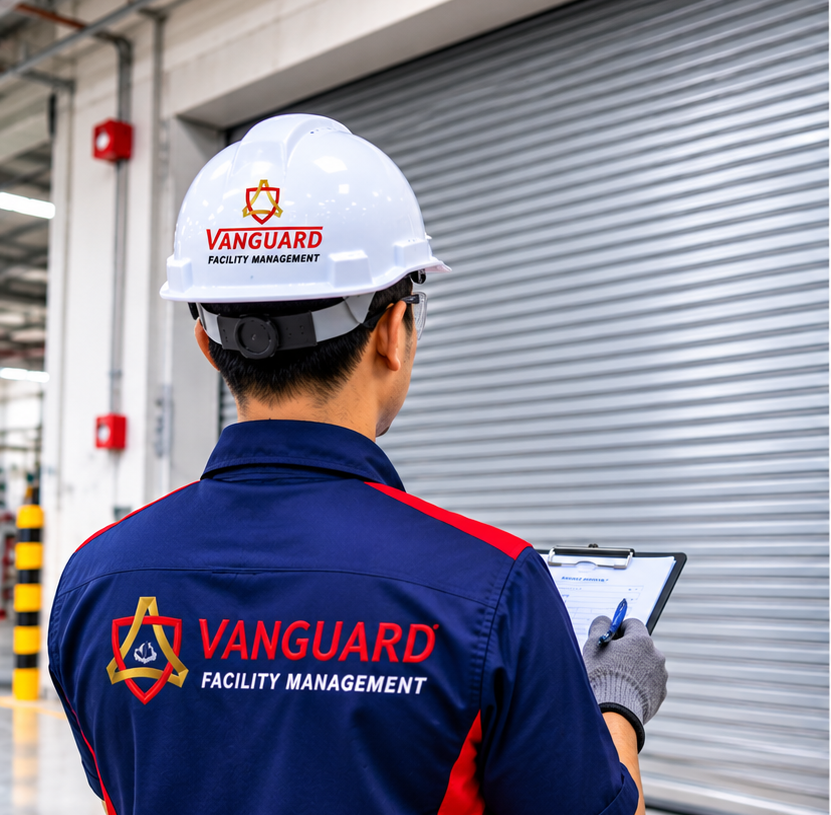
Correct installation is essential because even a properly tested fire shutter may fail to provide the intended protection if it is incorrectly installed or integrated.
The installation process should follow the approved drawings, manufacturer’s instructions and applicable regulatory requirements.
8.1 Site Assessment
The project team assesses the building opening, surrounding structure, available installation space and fire compartmentation requirements.
8.2 Selection of the Shutter System
The appropriate shutter type, fire resistance rating, dimensions and operating mechanism are selected according to the approved fire safety design.
8.3 Installation of Guide Rails and Curtain
The guide rails, supporting brackets, barrel and fire-rated curtain are installed according to the manufacturer’s specifications.
8.4 Electrical and Fire Alarm Integration
For electrically operated shutters, the motor, control panel, fire alarm interface and emergency power arrangements must be installed according to the approved design.
8.5 Functional Testing and Commissioning
The installation should undergo the required functional tests to confirm that:
- The shutter responds to its intended activation signal.
- The curtain moves smoothly.
- The closing speed and time meet the applicable requirements.
- Emergency power arrangements operate as designed.
- The system does not interfere with designated escape routes.
- Relevant documentation and commissioning records are available.
A Qualified Person should be involved where required for the project’s design, submission and regulatory approval.
9. Why Is Regular Fire Shutter Maintenance Important?
Fire rated roller shutters are often inactive during normal building operations. This means mechanical or electrical problems may remain unnoticed until the system is required during an emergency.
Regular maintenance helps identify potential faults and maintain operational readiness.
Common Fire Shutter Problems
| Problem | Possible Cause | Recommended Action |
| Shutter does not close | Motor or release mechanism fault | Inspect and test the operating mechanism. |
| Slow shutter movement | Mechanical resistance or component wear | Check guide rails and moving components. |
| Shutter stops halfway | Obstruction or control fault | Investigate the obstruction and control system. |
| Fire alarm does not activate shutter | Interface or wiring fault | Test the alarm interface and signal connections. |
| Unusual noise during operation | Worn or misaligned components | Inspect the curtain, guides and drive assembly. |
| Emergency power failure | Battery or backup supply problem | Check the emergency power arrangement. |
| Damaged shutter curtain | Physical impact or deterioration | Arrange an assessment and suitable repair. |
Recommended Maintenance Activities
Building owners and facility managers should establish a maintenance programme based on the applicable requirements, manufacturer’s instructions and approved fire safety documentation.
Important activities include:
- Inspect the shutter curtain for physical damage.
- Check guide rails, brackets and supporting structures.
- Examine the motor, release mechanism and control panel.
- Verify the fire alarm interface.
- Check emergency power supply arrangements.
- Conduct appropriate functional and closing tests.
- Record defects, repairs and inspection results.
- Arrange corrective work before returning a faulty system to normal service.
Determine the inspection frequency based on applicable standards, the system design, and the building’s Fire Safety Instruction Manual. Do not assume that one maintenance interval applies to every type of fire shutter.
For additional guidance, see Vanguard’s Fire Protection System Maintenance Services in Singapore.
10. Where Should Fire Rated Roller Shutters Be Installed?
Fire shutters are useful in buildings where an approved fire compartmentation strategy requires protecting large openings.
Shopping Centres and Retail Buildings
Shopping centres often have large openings between retail units, common areas and other building spaces. Fire shutters can help protect designated openings where required by the fire safety design.
Warehouses and Logistics Facilities
Warehouses may contain large storage areas and internal openings connecting different operational zones. Appropriate fire compartmentation helps limit fire spread.
Industrial Facilities
Factories and industrial plants may require fire shutters to separate production areas, storage spaces and other designated compartments.
Commercial Kitchens
Commercial kitchens involve cooking equipment, electrical systems and other potential ignition sources. Fire compartmentation may form part of the wider building fire safety strategy.
The suitability and positioning of a fire shutter must always be determined by the building’s approved fire safety design.
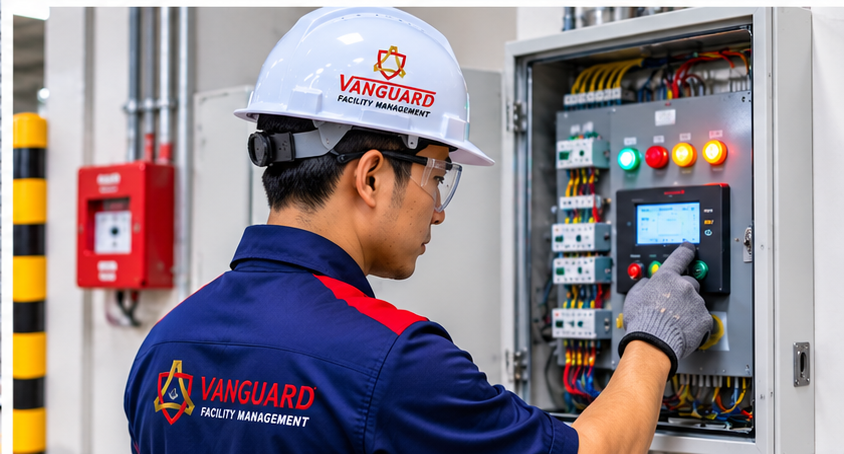
11. How Does Facility Management Support Fire Shutter Safety?
Fire safety does not end after installation. Building owners and facility managers need to ensure that fire protection equipment remains operational and that maintenance issues are addressed.
A structured facilities management programme can support fire shutter reliability through several activities.
Preventive Maintenance
Scheduled inspections help identify mechanical wear, electrical faults and other operational issues before they affect the system.
Fire Alarm System Coordination
Facility teams should ensure that the fire alarm system and associated shutter controls are maintained and tested according to their approved design.
Inspection Records
Maintenance reports provide a record of inspections, defects, repairs and follow-up actions.
Contractor Coordination
Facility managers can coordinate access, specialist inspections, maintenance activities and corrective work while minimising disruption to building operations.
Fire Safety Documentation
Building owners and responsible personnel should maintain relevant fire safety records, including the Fire Safety Instruction Manual where applicable.
SCDF’s Fire Code Appendix 2 explains that the Fire Safety Instruction Manual is intended to guide building owners, MCSTs, tenants, operators and contractors on fire safety management, maintenance regimes and evacuation procedures.
For businesses managing several building systems, Integrated Facilities Management in Singapore can help coordinate maintenance activities under a broader facilities management approach.
12. How Can Businesses Choose the Right Fire Rated Roller Shutter?
Selecting a fire shutter requires more than comparing product prices or dimensions. Businesses should consider the building’s fire safety requirements, product certification and long-term maintenance needs.
Use the following checklist when evaluating a system:
| Selection Factor | What to Verify |
| Fire rating | Does it meet the required fire resistance rating? |
| Product testing | Is the shutter tested to the applicable recognised standard? |
| SCDF compliance | Does the proposed product meet the applicable Fire Code requirements? |
| Opening dimensions | Is the system suitable for the actual opening? |
| Operating mechanism | Is gravity or electrical operation appropriate? |
| Fire alarm integration | Does the activation arrangement match the approved design? |
| Emergency power | Is the required backup supply provided? |
| Certification | Are the required certification and product labels available? |
| Installation | Will installation follow approved drawings and manufacturer instructions? |
| Maintenance | Is there a clear inspection and servicing plan? |
Before purchasing a system, request the relevant technical datasheet, fire test documentation, product certification and installation details.
Businesses should also consult an appropriately qualified fire safety professional before modifying existing fire compartmentation.
Frequently Asked Questions About Fire Rated Roller Shutters
1. How do fire rated roller shutters work?
Fire rated roller shutters operate when an approved fire detection or alarm mechanism activates the closing system. Depending on the design, the curtain descends under gravity or through an electric motor, forming a protective barrier that helps prevent fire from spreading between building compartments.
2. What is the difference between a fire shutter and a roller shutter?
A standard roller shutter is mainly designed for security and access control. A fire shutter is specifically tested and designed to provide fire resistance and support building compartmentation. An ordinary roller shutter cannot be considered fire-rated simply because it is made from steel.
3. Are fire rated roller shutters mandatory in Singapore?
Fire shutters are required where specified by the applicable building fire safety design and regulatory requirements. They are not mandatory for every commercial or industrial opening. The need for a fire shutter depends on the building’s layout, compartmentation and applicable SCDF requirements.
4. What is the maximum closing time for a vertical fire shutter in Singapore?
Under SCDF Fire Code 2023 Clause 3.7.7(c), vertical fire shutters not exceeding 6 metres in height must close fully within 30 seconds. Those exceeding 6 metres and up to 12 metres must close within 60 seconds. The maximum descending speed is 0.2 metres per second.
5. Do fire rated roller shutters work during a power failure?
Gravity-operated shutters descend following the release of their operating mechanism. Electrically operated fire shutters covered by Clause 3.7.7 must have an emergency power supply. The system should be assessed against its approved design to verify its operation during a power interruption.
6. What is SS 489 in Singapore?
SS 489 is Singapore’s specification for fire shutters. It covers requirements and testing methods for assessing the fire resistance of shutters used to protect openings against the passage of fire. The current listed edition is SS 489:2025.
7. Can a normal roller shutter be converted into a fire rated shutter?
A normal roller shutter cannot simply be converted into a compliant fire shutter by adding insulation or replacing its motor. The complete assembly must meet the relevant fire-resistance testing and certification requirements. A suitable tested and certified system should be selected instead.
8. How often should fire rated roller shutters be inspected?
Inspection and maintenance frequency depends on the applicable requirements, manufacturer’s recommendations, approved fire safety documentation and operating conditions. Businesses should establish a documented maintenance programme and conduct the required functional tests.
9. Can fire rated roller shutters replace fire compartment walls?
SCDF permits fire shutters to be used as compartment walls in specified circumstances under Clause 3.7.7. However, there are important exclusions, including certain means-of-escape areas and Fire Command Centres. The arrangement must meet the applicable fire resistance and design requirements.
10. What is the purpose of a fire alarm connection in a fire shutter?
The fire alarm connection provides an activation signal to the shutter’s control mechanism when a fire condition is detected. This allows the shutter to close according to its approved operating arrangement and help maintain the building’s fire compartmentation.
11. What should facility managers check during fire shutter maintenance?
Facility managers should ensure that the shutter curtain, guide rails, motor or release mechanism, control panel, alarm interface and emergency power arrangements are inspected and tested as applicable. Defects should be documented and corrected by appropriately competent personnel.
12. Who should inspect fire rated roller shutters in Singapore?
Inspection should be carried out by appropriately competent personnel familiar with the specific shutter system, applicable standards and manufacturer instructions. Where engineering assessment or regulatory submissions are required, the relevant Qualified Person or Professional Engineer should be engaged.
Conclusion: Keep Your Building Protected with Proper Fire Shutter Maintenance
Fire rated roller shutters play an important role in protecting commercial and industrial buildings by helping prevent fire from spreading through designated openings.
However, their effectiveness depends on more than the quality of the shutter itself. Correct product selection, compliant installation, appropriate fire alarm integration, emergency power arrangements and regular maintenance all contribute to reliable operation.
For building owners, property managers and facility management teams in Singapore, understanding how fire rated roller shutters work is an important step towards maintaining a safer building environment.
Vanguard Facility Management Pte. Ltd. supports businesses with professional facilities management, fire protection system maintenance and engineering inspection services in Singapore.
Whether you manage a commercial property, industrial facility, warehouse or large operational building, proper maintenance and technical support can help keep essential building systems in good working condition.
Contact Vanguard Facility Management Pte. Ltd. to discuss your facility maintenance and fire protection requirements in Singapore.